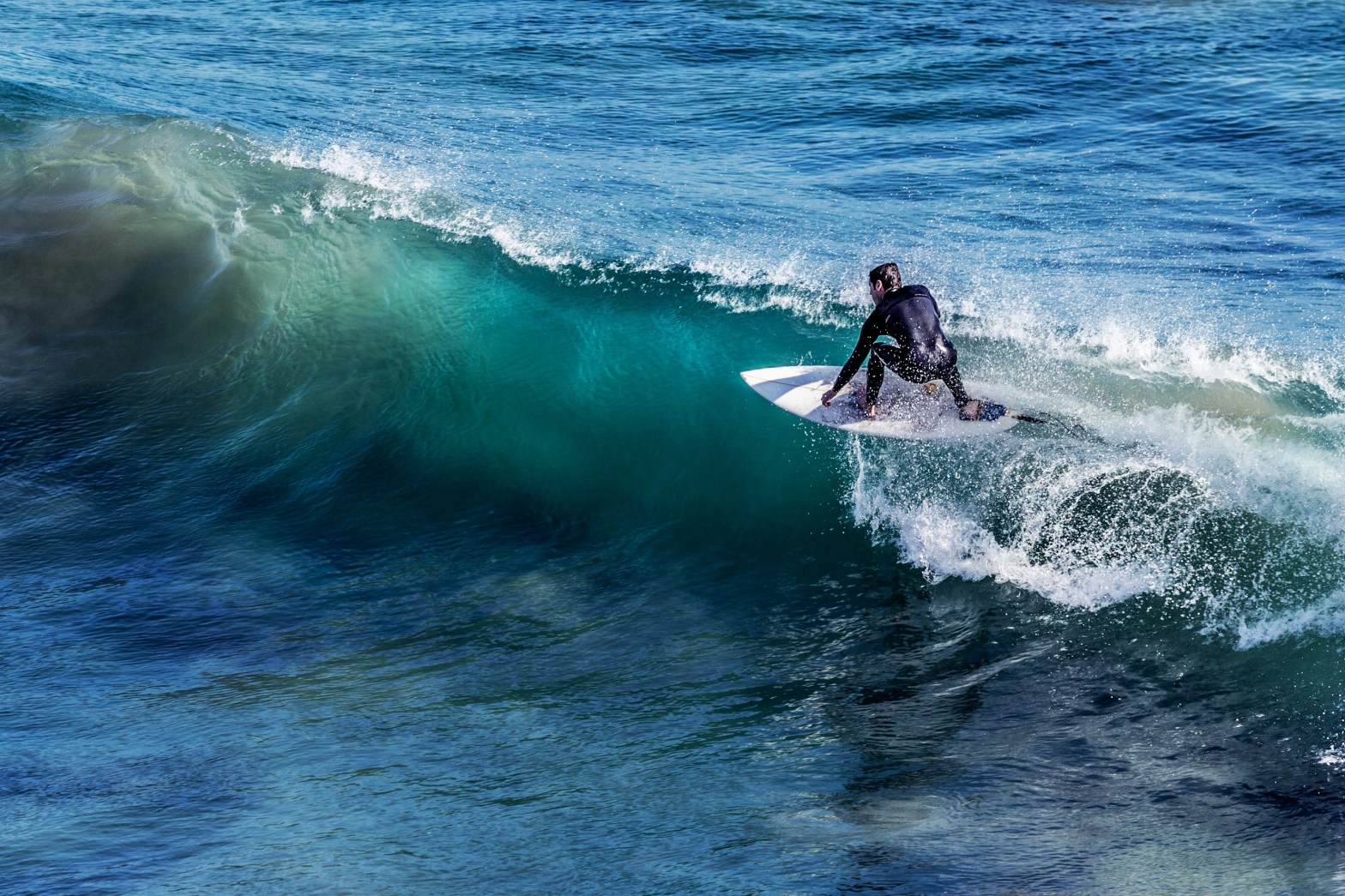
The sand scalds the bottom of feet. Despite the calendar turning to fall, the weather in Southern California has remained firmly stuck in the heat of summer. The Malibu coastline has wide sandy stretches interspersed with rocky caves and tide pools. Sometimes the rip currents are powerful. On this particular day, the waves are crashing and lifeguards patrol the beach on foot and by helicopter. These are not the kinds of waves that get recorded for meditation apps and white noise machines. I stand on the shore, keeping watch, as my three kids enter the ocean. Each offers a different perspective on how we might approach prayer and a relationship with Christ.
Dip your toe in the water
My youngest child lingers at the edge… he dips his toe in the water and allows the waves to tickle and tease. He is cautious by nature, moving slowly, studying the water’s power and movement. He makes a little barricade out of sand and boogie boards. He wants to feel the cool water rushing in, but not TOO much.
I am guilty of standing on the edge of prayer. I speak the words, and I go through motions, but I do not allow myself to fully enter in. This kind of prayer feels safe and predictable. I know what kind of answers to look for from God. I ask a simple prayer, and I look for a simple answer.
Let the wave take you where you want to go
My older son and his friends entered the water with a plan. They boogie board, body surf, and wakeboard. The water is a means of carrying them where they want to go. They wait for the waves that are strong enough to bring them to shore, floating amidst the surf and letting the weak ones pass them by.
Do you ever force yourself to pray a certain way? Or find that you are trying to “get something out of prayer” rather than simply showing up and allowing God to take the lead.
We all have ways of praying that are familiar and comfortable. Prayers and prayer forms that we know by heart are like “muscle memory,” similar to riding a bike, playing an instrument, or typing on a standard keyboard. Our bodies perform these functions without thinking, leaving mental space for other things. When we learn to ride a bike, we focus on the placement of our feet, the way our legs feel on the pedals, and how long it takes to brake. Once we know how to ride a bike, our mind shifts to navigating street signs, watching for obstacles, and enjoying the scenery around us. The memorized, familiar prayers become the muscle memory and the tools that we build on as our body and mind learn new ways of praying.
While accompanying a group of adults through an introduction to the Spiritual Exercises in a parish, one older woman struggled to enter into the new ways of praying that were being presented. She did not want to drop out of our series, but the way that we were asking her to pray was quite radical. A few weeks into the session, she shared with the group that she decided to keep praying her daily rosary but change her methods. Instead of clicking through the beads without pausing, she slowed down and allowed God to speak to her as she prayed each mystery. She was amazed that God met her there, in the same “old” routine, when she approached it with a renewed openness.
Crashing down
My daughter abandoned the sand toys and boogie boards early into our beach trip. Instead of trying to control the waves or where they took her, she simply stood on the shore and allowed the water to crash over her. Some waves lapped at her feet and some covered her hair in sand and seaweed. For nearly three hours, she allowed herself to be completely at the whim of the water. I could barely drag her out long enough to eat.
When I imagine the “true spiritual freedom” in Christ that Ignatius describes in the Spiritual Exercises, I imagine my daughter at the beach with the all-consuming power of the waves and her singular focus on the experience. Much like the Three Degrees of Humility, there are varying degrees of freedom in surrendering to God. More often than not, I stay on the surface or dance around the edges of trust. I look at her reckless abandonment to the ocean and recognize the freedom I have craved in trusting God.
There is no shortage of prayer material in the digital and physical bookshelves of my life. These resources are meaningless if I have not first tapped into the real desire of my heart. For me, that begins with noticing and naming the way I want to feel with God. I have spent too much time seeking out the answer in prayer that confirms what I have already decided.
Today, I pray to feel the ocean spray on my face, the hot sand beneath my feet, and the enveloping in God’s love. Then, no matter how messed up my hair is, or how much sand has filled the trunk of my car, I will be confident that God was there with me.
Going Deeper
Read the rest of the series on Encountering Freedom in Christ, on the Into the Deep blog
Read more about finding spiritual freedom in nature with Freedom in Gliding Like the Birds, written by the late Melinda LeBlanc.
Consider the exhilaration of Ignatian Freedom, offered to each of us through our friendship with Christ.
Pray with the idea that freedom comes through surrender with Three Degrees of Humility.
Photo by Vladimir Kudinov on Unsplash

